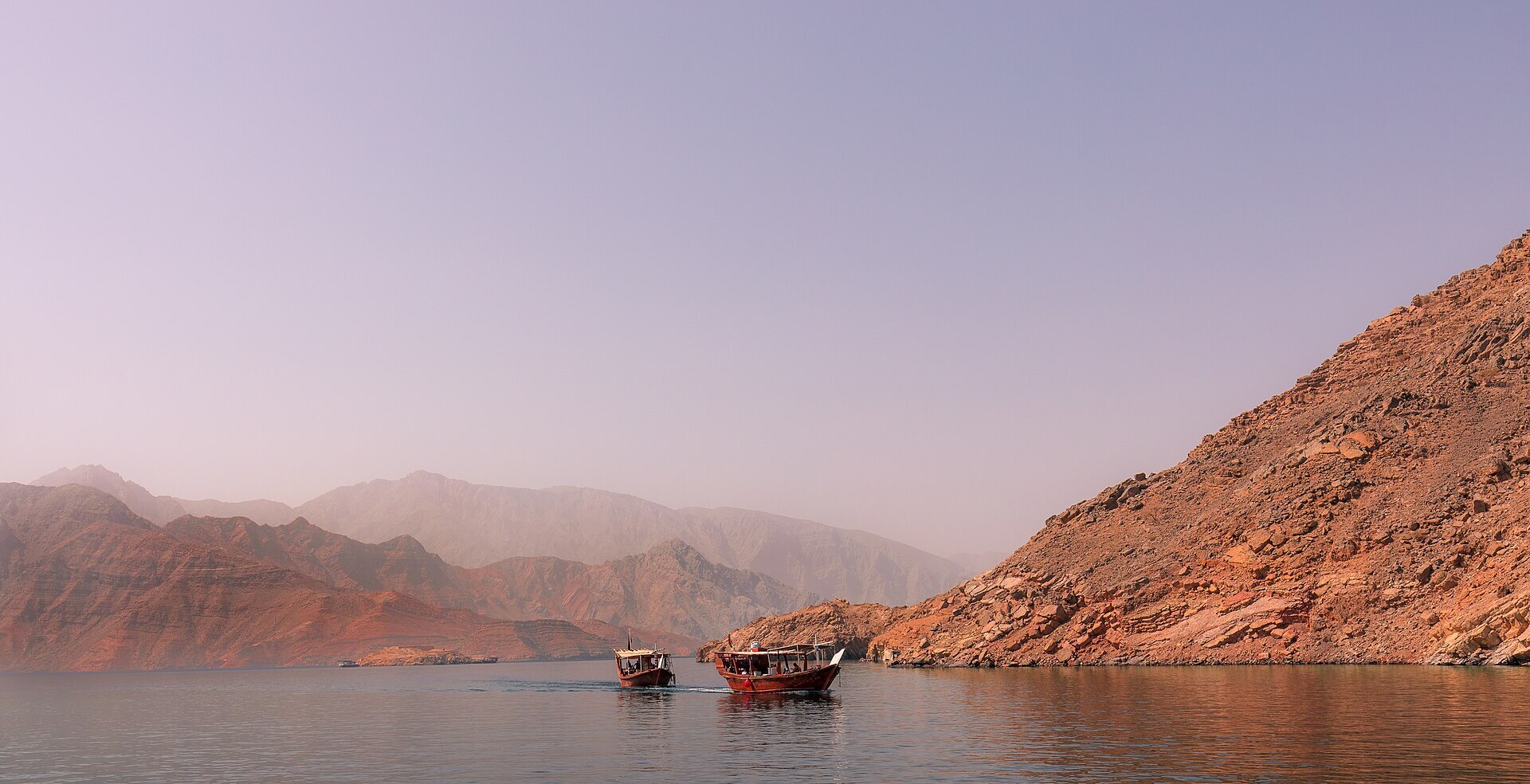
Khasab Castle sits a few hundred metres from the dhow port, its round watchtower and thick walls the first solid landmark most visitors notice once they clear the border. It is small enough to see properly in under an hour, which makes it one of the few Musandam attractions that fits neatly into a morning before or after a boat trip. The building is modest by Gulf fort standards, but its position at the gateway to the Strait of Hormuz gave it a job that mattered far beyond its size.
Who built it, and why here
The core of the castle dates to the late 16th century, built during the period of Portuguese presence on the Musandam coast, when control of the strait meant control of trade routes between the Gulf and the Indian Ocean. The Portuguese held forts at several points along this shoreline, using them to tax and monitor shipping rather than to settle in numbers. After the Portuguese were pushed out in the 17th century, the fort passed to local and eventually Al Said rule, and it was expanded and repaired over the following centuries. The central round tower is the oldest surviving element; the surrounding walls and rooms were added later, giving the structure its current square-with-a-circle-in-the-middle plan.
What you will see inside
The interior now works as a small regional museum, with rooms arranged around an open courtyard. Exhibits cover traditional Musandam life: fishing tools, old doors and household items, weapons, and photographs of the mountain villages that are otherwise hard to reach without a 4x4 trip up toward Jebel Harim. A few rooms are set up to suggest how families lived inside a fort compound, with simple furnishings and mannequins in traditional dress. None of it is flashy, but the labelling is clear enough in English and Arabic to make a self-guided visit worthwhile. The round tower itself can be climbed via a narrow staircase, and the view from the top takes in the harbour, the dhow moorings, and the bare hills behind the town.
Practical visiting details
The castle is generally open daily except Friday mornings, with typical hours running from around 8am to 2pm, though Ramadan and public holidays shift this, so it is worth checking the day's schedule locally rather than assuming. Entry has historically been free or charged a token amount (under 1 Omani rial), paid at a small desk near the entrance. There is no need to book ahead. Shade is limited in the courtyard, so a visit in the earlier part of the morning is more comfortable than midday in summer, when temperatures in Khasab regularly pass 40°C between June and August.
Bring small Omani rial notes for entry, wear shoes you can climb a narrow stone staircase in, and allow 45 minutes for a full loop of the courtyard rooms and the tower.
Fitting the castle into your day
Most visitors see the castle as a bookend to a dhow cruise or mountain safari rather than a destination on its own. If you have arrived on a day trip from Dubai, the castle works well in the hour or two after crossing the border, before boarding a boat for the khors. Those staying overnight in town, as covered in the guide to where to stay in Musandam, can walk from most central hotels in 10 to 15 minutes. The port itself, where dhows load for day trips and overnight cruises, is close enough to combine both in a single outing without needing a taxi.
Beyond the walls: Khasab's other old stones
The castle is not the only fortification worth a look. Smaller watchtowers dot the hills around town, remnants of the same era of coastal defence, though most are unmarked and reached only on foot. History buffs who enjoy the castle's story tend to also appreciate the isolation of Telegraph Island, a British colonial-era relay station now visited mainly by boat, which extends the theme of outposts built to watch a strategic waterway. Between the two sites, a visitor gets a reasonably complete picture of how outside powers, Portuguese, Omani, and British in turn, treated this stretch of coast as a chokepoint worth guarding rather than a place to settle.
A quiet counterpoint to the fjords
After a day spent on the water looking for dolphins in the khors, the castle offers a different kind of Musandam, one built on stone rather than silence. It will not take an entire afternoon, and nothing here is guaranteed to astonish, but it adds context to everything else in the region: the reason dhows still matter, why the border crossing exists where it does, and why this narrow stretch of coast has drawn outside interest for four centuries. For a region defined mostly by its emptiness, the castle is a useful reminder that people have been fighting to control that emptiness for a very long time.