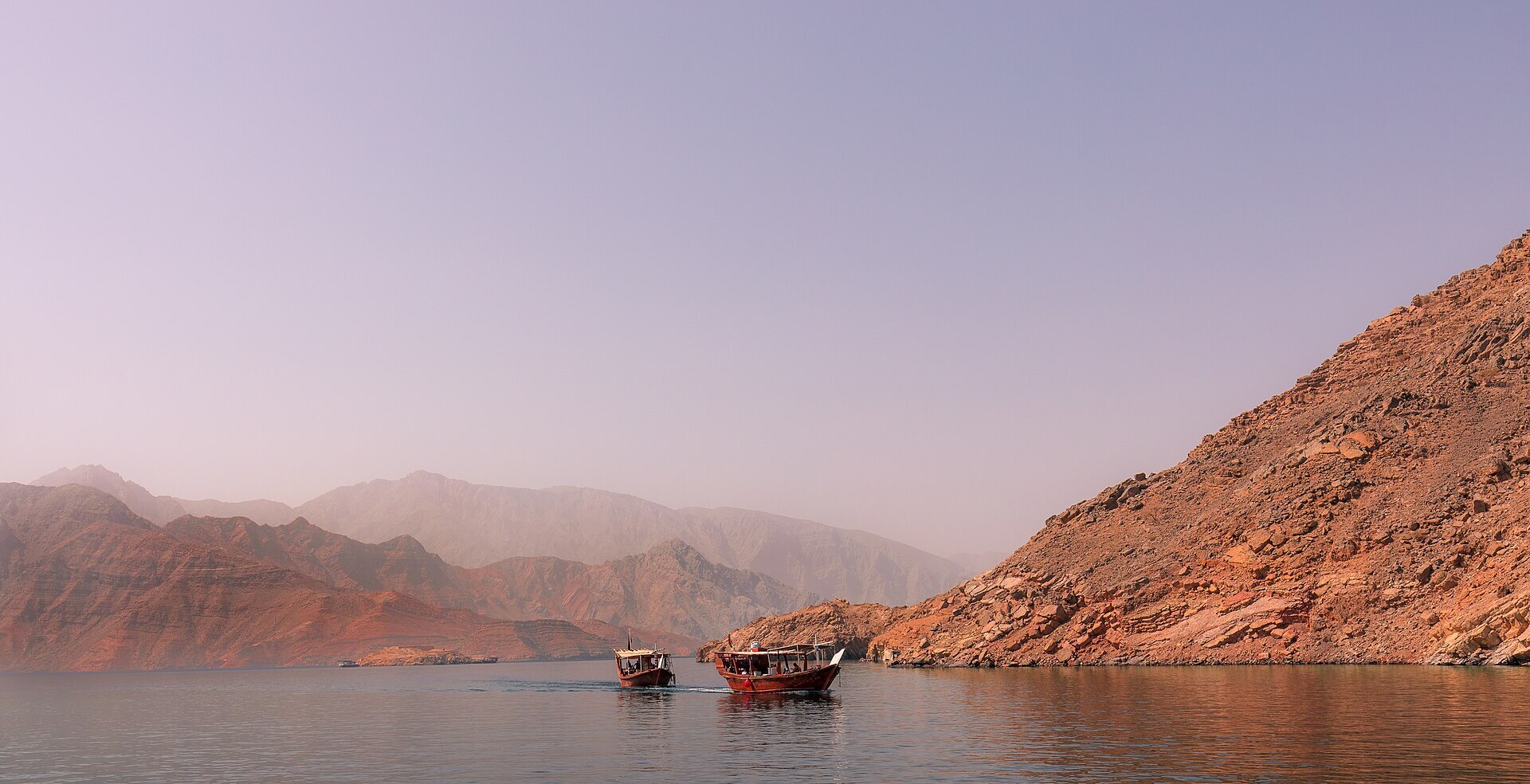
Every dhow operator in Khasab mentions dolphins before anyone asks. It is the line that sells the half-day cruise. The honest answer is that sightings are frequent but never certain, and the difference between a five-minute glimpse and twenty minutes of a pod riding the bow wake usually comes down to season, time of departure, and which khor the boat actually enters. This guide covers what shapes those odds, without pretending any schedule is fixed.
The season that matters most
Spinner and bottlenose dolphins are resident in the waters around Musandam year-round, but visibility and sea conditions shift the odds considerably. The cooler months, roughly November through April, bring calmer seas and clearer water in the Strait of Hormuz approaches, which makes spotting easier and keeps boats running full routes rather than cutting trips short. From June through August, the khareef-adjacent heat and occasional chop push some operators to shorten routes or stick closer to Khasab harbor, which reduces the chance of reaching the deeper channels where larger pods tend to feed. Shoulder months (May, September, October) are a reasonable middle ground: warm but usually still navigable.
Time of day on the water
Morning departures, typically between 8:00 and 9:00, see calmer water before the afternoon wind picks up, and dolphins are commonly reported feeding in the early hours. Afternoon dhow trips exist too, often departing around 13:00, but by midday the surface can be choppier in the open sections near the Strait, which makes pods harder to spot even when they are present. If a trip offers a choice, the early slot is the better bet, not because dolphins disappear later, but because you can actually see them.
Which khors see the most activity
Khor Najd and the approach to Khor Sham are the two areas most dhow routes pass through, and both have a track record of sightings, particularly spinner dolphins that ride the bow wave of a moving boat. Telegraph Island, a common stop on full-day Khor Sham routes, sits near deeper water where pods sometimes pass close to shore. Smaller, quieter khors further from the main Khasab departure point see fewer boats and, anecdotally, calmer dolphin behavior, but operators reach them less often since they add an hour or more to the trip. Ask at booking which khor is on the day's route rather than assuming all cruises cover the same water.
Most half-day Khasab dhow cruises report dolphin sightings on a strong majority of trips in the cooler season, but no operator can promise a sighting. Treat it as likely, not guaranteed, and judge the trip on the khor silence and the coastline too.
Full-day versus half-day cruises
A half-day cruise (roughly 3 to 4 hours, priced from about 15 to 25 OMR per person depending on season and group size) covers less ground, usually sticking to Khor Najd and the inner bay. A full-day cruise (6 to 8 hours, often 25 to 40 OMR) reaches further into Khor Sham and sometimes toward Telegraph Island, covering more water and more varied depth, which statistically means more chances to cross paths with a pod. If dolphins are the priority over dhow-deck ease and a slower pace, the full-day option is worth the extra hours and cost.
What affects a single day's chances
Wind direction and recent weather matter more than the calendar date. A few days of strong shamal wind can push dolphins to feed in different patches of water, and local boat crews adjust routes accordingly, often with better local knowledge than any fixed schedule can offer. Boat noise and speed also play a role: a dhow moving at a steady, moderate pace is more likely to draw curious dolphins to the bow than one cutting fast across open water. Group size on the boat rarely affects sightings, but a quieter deck does seem to keep pods interested longer once they arrive.
Managing expectations on the day
Crews are generally upfront if a trip has been quiet, and reputable operators do not fake a sighting or linger needlessly chasing a pod that has moved on. If dolphins do not appear, the fallback is still worthwhile: the fjord walls, the stillness of the inner khors, and the occasional fishing village are reasons enough to be out on the water. Bring sun protection regardless of season, since shade on a dhow deck is often limited to a canopy at the stern, and the glare off the water intensifies the midday sun considerably.