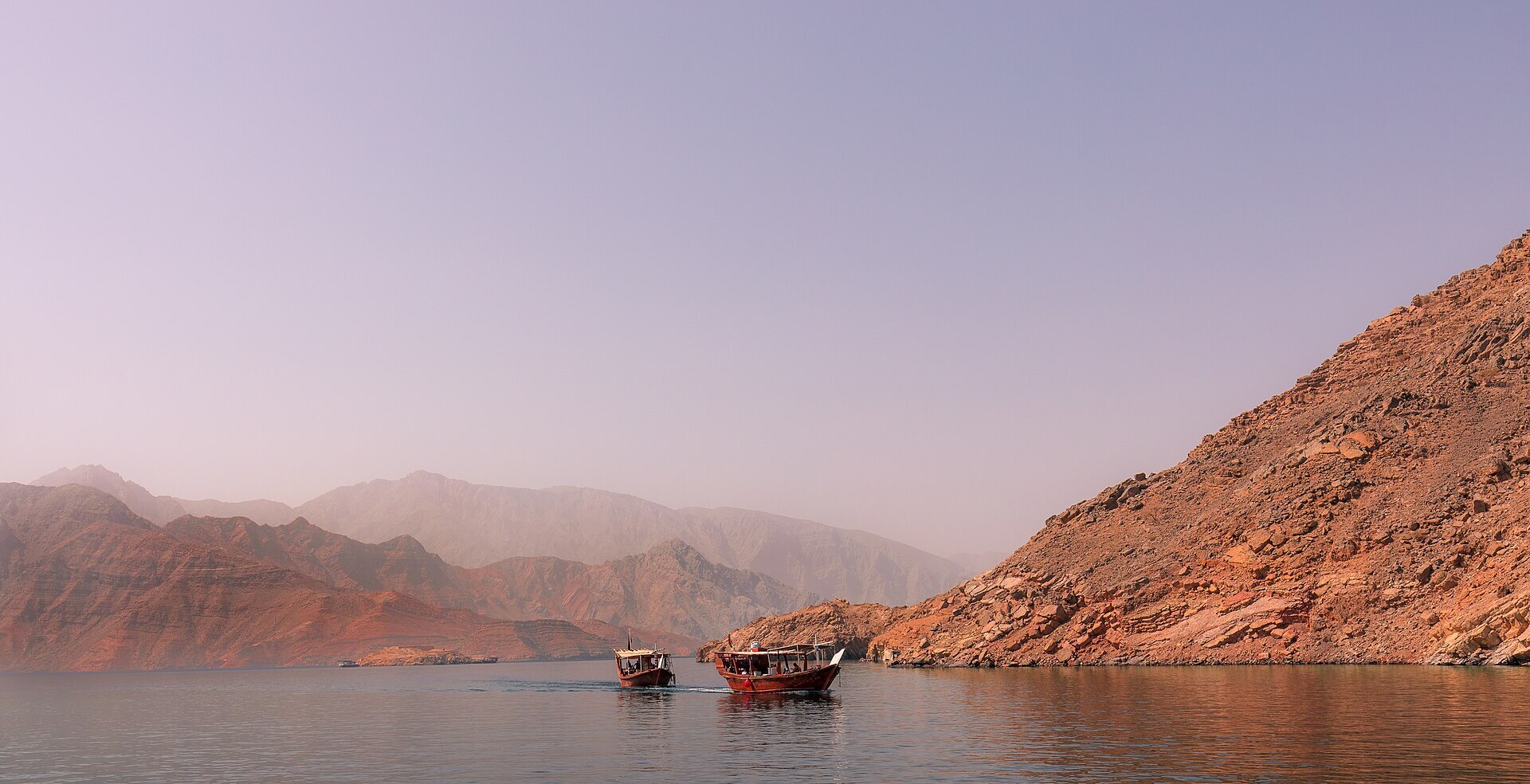
Musandam is a small peninsula with one working town, so the lodging question is not "which neighbourhood" but "which mode of travel." Most visitors fall into one of three patterns: they base themselves in Khasab for a few nights, they sleep aboard an overnight dhow anchored in a khor, or they skip sleeping over altogether and treat the whole trip as a long day from Dubai. Each has a different rhythm, a different price range, and a different kind of morning. None is wrong, but they suit different travellers, and booking windows differ sharply by season.
Khasab town: the practical base
Khasab is Musandam's only real town and the default base for anyone spending two or more nights in the exclave. It has small hotels and guesthouses in the Omani three-star range, roughly 35 to 70 USD a night in low season (May to September, when heat keeps numbers down) and 60 to 120 USD from October to April, when weekend demand from the UAE pushes prices up. The port, the fish market, and the road up to Jebel Harim's fossil beds are all within a 10 to 20 minute drive, and most dhow operators pick up guests directly from town jetties between 8:30 and 9:30 in the morning. Khasab suits travellers who want a shower and air conditioning at the end of the day, who are combining a dhow trip with a mountain safari, or who arrived via the land border and want a fixed point before continuing. Book six to eight weeks ahead for Thursday and Friday nights between November and March; weekdays in summer rarely sell out.
Sleeping aboard: the overnight dhow
For a genuinely different night, operators run overnight dhow cruises that anchor in one of the fjords after sunset, usually off Telegraph Island or a quieter khor further in. Cabins are simple, shared bathrooms are common, and the appeal is the silence after the engine cuts: no town lights, no traffic, just water slapping the hull. Expect 120 to 220 USD per person including dinner, breakfast, and the cruise itself, with private cabins at the top of that range and shared-deck mattress options cheaper. This suits travellers who want the fjords, not the town, and who are reasonably tolerant of basic plumbing and a rocking deck. Details on what the night actually involves, mattress quality, generator noise, swimming before breakfast, are covered in a dedicated guide to Musandam's overnight cruises. Reserve at least three to four weeks out in winter; overnight boats run far less often than day cruises and fill faster.
If you are staying overnight in Khasab, plan your entry for the morning so you clear immigration with daylight to spare; evening crossings mean dealing with paperwork after a long drive. The crossing itself is detailed in a guide to crossing into Musandam without drama.
No overnight: the Dubai day trip
A large share of visitors never book a bed in Musandam at all. Leaving Dubai around 6:00 to 7:00 in the morning, clearing the Tibat border by mid-morning, and joining a day dhow by 9:30 to 10:00 is a workable itinerary that returns to Dubai by late evening, typically 9:00 to 10:00 pm depending on traffic and border queues. This suits travellers on a tight schedule, those based in Dubai without a rental car, or anyone unsure whether a full overnight in Oman appeals to them. It costs less overall, since there is no hotel or cabin to pay for, but it is also a long day: six to eight hours of driving and border time bracketing four to five hours on the water. The full route, timing, and what the crossing involves is laid out in a guide to doing Musandam from Dubai in a day.
Which to pick, by traveller type
Families with young children generally do better with a Khasab base: a fixed hotel room, a pool to cool off in after the mountain heat, and no need to pack for a night at sea. Couples or solo travellers chasing the fjord silence described across this site should prioritise the overnight dhow; it is the only way to wake up inside a khor rather than driving to one. Budget-conscious travellers already in Dubai, or those with only one free day, are well served by the day-trip model, accepting the long hours in exchange for zero lodging cost. Anyone hoping to see dolphins, which are common but never guaranteed along the approach to the fjords, should check seasonal patterns before fixing dates; the odds and best months are set out in a guide to when and where Musandam's dolphins show, and that timing can influence whether an overnight or a day trip gives better morning light for sightings.
Shoulder-season timing and what changes
October through April is Musandam's busy season, driven largely by UAE weekend traffic; Thursday and Friday nights see Khasab hotels and overnight dhows both near capacity, and prices can rise 20 to 40 percent over weekday rates. May through September is quieter and considerably hotter, with daytime temperatures regularly above 40°C, which makes the air-conditioned comfort of a Khasab hotel room more appealing than a dhow deck at midday, though evenings on the water remain pleasant. Whichever option you choose, confirm the day's schedule directly with the operator rather than assuming fixed departure times; dhow timings shift with tide, weather, and group bookings.