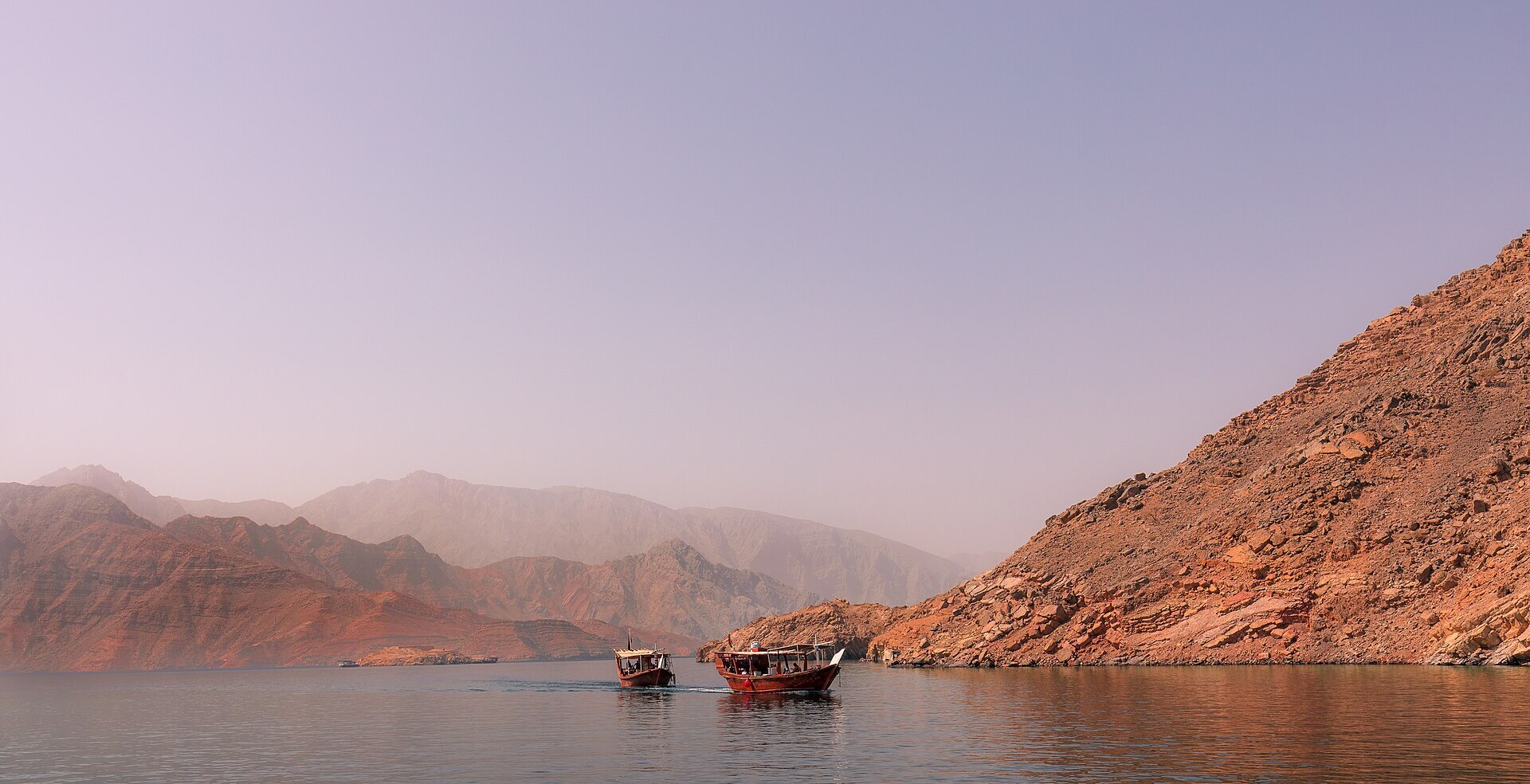
An overnight dhow cruise out of Khasab is the signature Musandam experience: one night afloat, anchored inside a fjord after the day-trippers have gone home, with the khor silence settling in once the engines cut. Most operators run a similar shape of trip (Khasab to the Kumzar peninsula or the inner fjords, a swimming stop, a barbecue dinner, sunrise on deck) but the boats themselves differ enormously, from basic shared dhows with mattress rows to smaller cabin boats with private bathrooms. Here is what actually varies, and what does not.
The route: what the overnight actually covers
Departure is usually late morning from Khasab port, though check the day's schedule since timings shift with tide and season. The dhow heads into Khor Ash Sham or toward Kumzar village, a round trip of roughly 20 to 30 kilometres depending on the exact route chosen that week. Mid-afternoon brings a swimming and snorkelling stop near one of the sheltered inlets, then the boat anchors for the night in calm water away from the open strait. Engines cut after dinner, and this is the part the brochures cannot photograph: no generator hum, no other boats, just water against the hull.
Cabins, deck space, and who suits which boat
Traditional wooden dhows converted for overnight use lay foam mattresses along an open deck under a canopy, shared with the rest of the group, usually somewhere between 8 and 20 passengers. Smaller dhows offer 4 to 8 enclosed cabins, some with ensuite bathrooms and air conditioning. Couples and families traveling May to September will notice the difference: nights are hot and humid, and a cabin with working AC matters more than the view. Budget travelers on cooler-season trips (November to March) are usually fine on open deck with a sea breeze and a sleeping bag liner.
Ask before booking how many passengers share your boat and whether mattresses are assigned or first-come. A 12-berth dhow at half capacity feels completely different from the same boat full.
Food, swimming, and the dolphin question
Meals are simple and repeated across most operators: a light lunch, a barbecue dinner of grilled fish or chicken with rice, and a basic breakfast before the return leg. Snorkelling masks are typically provided, fins less often, so bring your own if you have them. Spinner dolphin pods are seen regularly along the Khor Najd stretch and near Telegraph Island, but sightings are never guaranteed and no operator should promise them. Treat a pod alongside the boat as a genuine bonus, not a line item you paid for.
Prices and what is typically included
Per-person rates for a one-night cruise run roughly from OMR 35 to OMR 70 (about USD 90 to 180), with shared-deck boats at the lower end and private-cabin dhows at the top. Meals, swimming stops, and snorkel gear are usually bundled in; alcohol is not sold on board since Musandam operates under Oman's licensing rules, and transfers from Khasab town to the port are often extra unless your accommodation is walking distance. Confirm what the quoted price covers before paying a deposit, since inclusions differ more between operators than the marketing photos suggest.
Border, visa and the Dubai run
Khasab, the departure point for almost every overnight cruise, sits in Oman's Musandam exclave, reached overland from Dubai or Ras Al Khaimah through the Tibat border crossing. Most nationalities arrange an Oman visa in advance or on arrival, but the list of eligible countries changes, so check current requirements rather than assume. Weekend and holiday queues at the border can run long: budget two to three hours for the crossing itself on a busy Thursday or Friday, less on quieter weekdays. If you are driving a rental car across, confirm with the rental company that cross-border coverage is included, since not all UAE agreements extend to Oman.
Timing it right: season and booking window
Cruises run year-round, but October through April offers the most comfortable combination of daytime heat and cool nights on deck. June through August is hot and humid enough that cabin air conditioning stops being a luxury and becomes the main reason to upgrade. Fridays, and Omani public holidays in particular, sell out fastest, so reserving one to two weeks ahead during the November to February peak is sensible. Shoulder months (April, May, September) tend to have more last-minute availability and sometimes softer pricing.