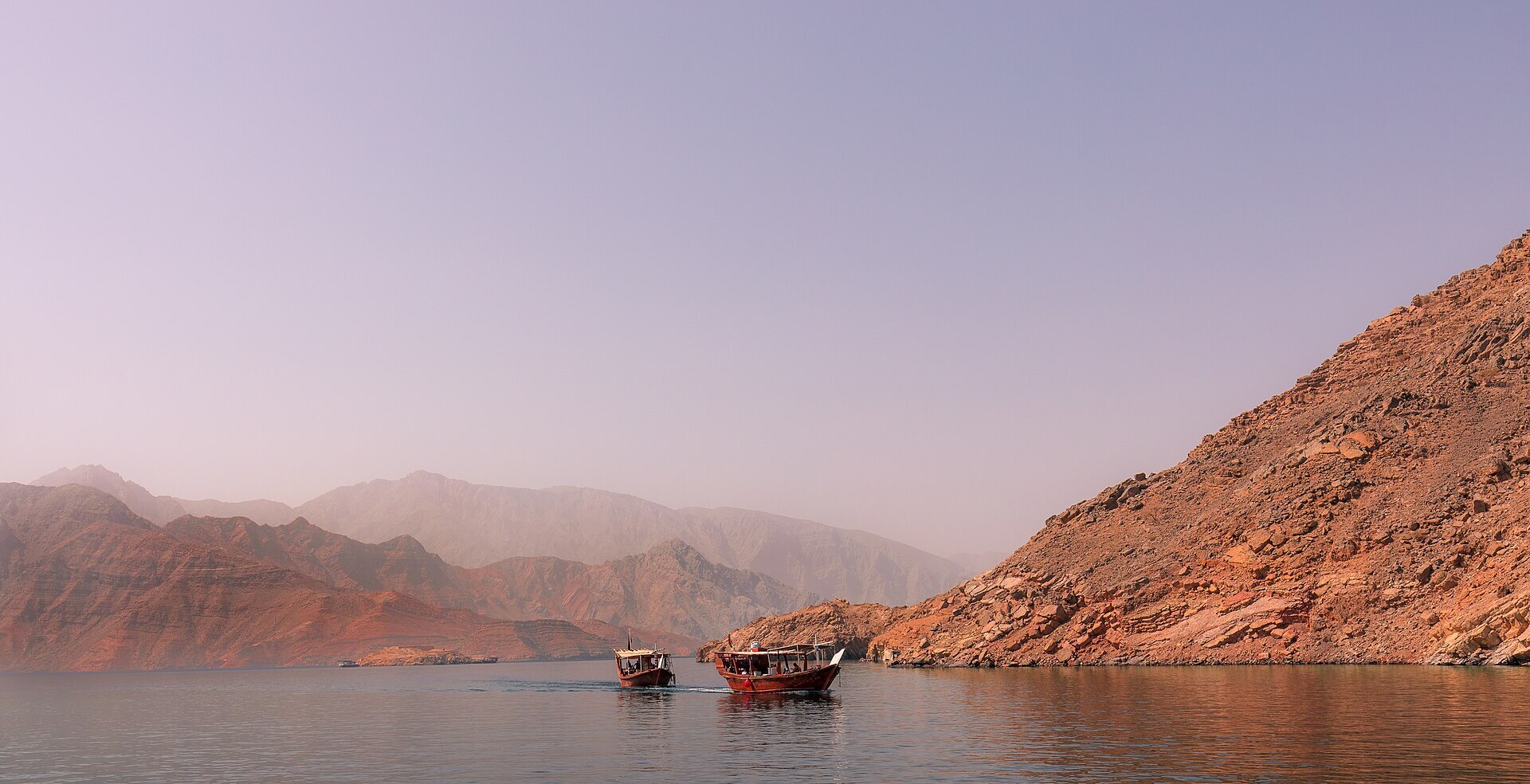
Khasab is not a food destination in the Instagram sense: there is no tasting menu scene, no fusion wave, no late-night street food sprawl. What it has instead is a small, honest Omani exclave diet built around the sea, the date palm and a handful of family-run kitchens near the harbour and the main souq road. Most visitors eat well here without trying hard, as long as they know what to look for and when the kitchens actually open.
The Omani breakfast worth waking up for
If your stay includes a night in town before or after a cruise, an Omani breakfast is worth the early start. Expect flatbread (khubz), a plate of dates, Omani honey if it is in season, and a lentil or chickpea stew called balaleet or a simple egg dish. Karak tea, strong and sweetened with condensed milk, is the standard accompaniment and costs around 0.3 to 0.5 Omani rial a glass at most local cafes. Breakfast service generally starts around 6:30 or 7am and tapers off by mid-morning, so this is not a meal to leave until 11am. If you are staying overnight in a Khasab hotel rather than doing a Dubai day trip, ask your guesthouse where the staff themselves eat breakfast: it is usually the better answer than any guidebook list.
Grilled fish, the honest centrepiece
Khasab's fishing harbour lands kingfish, hammour, tuna and occasionally lobster depending on season, and most of it ends up grilled whole over charcoal the same day. A grilled fish plate with rice and a side salad typically runs 3 to 6 Omani rial depending on the catch and the size, and it is usually the most reliable thing on any menu in town. Lunch service runs roughly from noon to 3pm, with a second window from around 7 to 10pm. If you are on an overnight dhow cruise, the crew will often grill the day's catch on deck or on a small beach stop, which is as fresh as the fish gets and usually included in the cruise price rather than charged separately.
Shuwa, machboos and the slow dishes
Shuwa, goat or lamb marinated in spices and slow-cooked (traditionally in an underground pit, though most restaurant versions use a conventional oven now) for upward of six hours, is the dish to order if you see it on a menu, particularly around Eid or on Fridays when families prepare it at home and some restaurants follow suit. Machboos, a spiced rice dish with chicken, fish or meat, is the everyday equivalent and is available most days for 2.5 to 4 Omani rial. Both are usually eaten with the right hand, scooped with bread or rice, and shared from a central platter if you are eating with Omani hosts or guides.
Friday lunch (around 12:30 to 2pm) is the busiest restaurant window in Khasab, since it follows the main weekly prayer. Expect a short wait at the more popular local spots, and avoid planning a tight schedule around this slot if you also want to visit Khasab Castle or the souq that same afternoon.
Dates, halwa and the sweet side
Dates are everywhere in Musandam, sold loose by weight in the souq (roughly 1 to 2 rial per kilo depending on variety and quality) and served free alongside tea in most cafes and homes. Omani halwa, a dense, spiced sweet made from sugar, ghee, nuts and rosewater or saffron, is worth seeking out in the souq area, usually sold by weight and best eaten the same day. It is a traditional welcome gift as much as a dessert, and a small box makes a reasonable, non-perishable souvenir for a day or two of travel.
Eating on the water: what dhow lunches actually include
Most half-day and full-day dhow trips out of Khasab harbour include a lunch stop, usually grilled or fried fish, rice, salad and fruit, served buffet-style on deck once the boat anchors in a calm khor. This is included in the standard trip price, typically 10 to 20 rial per person depending on the operator and trip length, so there is rarely a need to bring your own food beyond water and snacks. If part of your motivation for the trip is wildlife rather than food, pair your meal timing with the better sighting windows described in the guide to when and where dolphins are likely to appear, since boats often slow or stop for dolphins shortly before or after the lunch anchorage.
Souq snacks and the Dubai run factor
Khasab's small souq has a scattering of bakeries and juice stalls selling fresh mango, lime and date shakes for around 0.5 to 1 rial, useful on a hot afternoon between the castle and the harbour. Because many visitors arrive on the overnight or day-trip route from the UAE, it is worth knowing that the food options thin out considerably once you leave town for the mountain roads, so eat or stock up in Khasab itself before heading up to Jebel Harim or out toward the fjords. If you are crossing from Dubai and want to plan the day around a proper lunch in town rather than a rushed one, the practical details are covered in the guide to doing Musandam as a day trip from Dubai, including realistic timing for the border and the drive.